

What if you took Scott Pilgrim vs. the World, mixed it with a uniquely immigrant experience in Toronto, and built on one of Shakespeare’s most famous tragedies? That’s what you’ll see in A Tribe Called Love, the feature debut of Mohamed Ahmed.
The story centers around Farah (Ahmed Ibrahim) in 2009. He’s an awkward Somali teen who has a crush on Halima (Muntaha Mohamed). They’re clearly into each other, but there’s a problem. In Somali culture, the communities adhere to one of four tribes, and you can’t cross-pollinate. Halima’s father is a respected elder in the community, and there’s another suitor in Mahad (Nabil Rajo, Brilliant Minds) who is very protective of keeping things within the same clan or tribe. The kids are warned about their budding romance, and there’s also unrest within the tribes, which has until now existed in relative peace. Big Money (Guled Abdi, Tallboyz), leader of the north tribe, wants to unify, but The Commish (Nael Hubaishi), who runs the west tribe, wants to maintain the borders between them. When violence hits the community, the two star-crossed lovers are separated. As an adult, Farah (Dalmar Abuzeid, Degrassi: The Next Generation, Anne with an E), who has held Halima (Feaven Abera, Wayward) in his heart for 14 years, has to return to Toronto to sell his family’s failing restaurant. The neighbourhood has changed for the worse, and Farah has to contend with his cousin Mohamed (Yonis Mohamoud), who has been running the neglected restaurant, a hurt Halima and the repercussions of the long-standing tribal beefs.
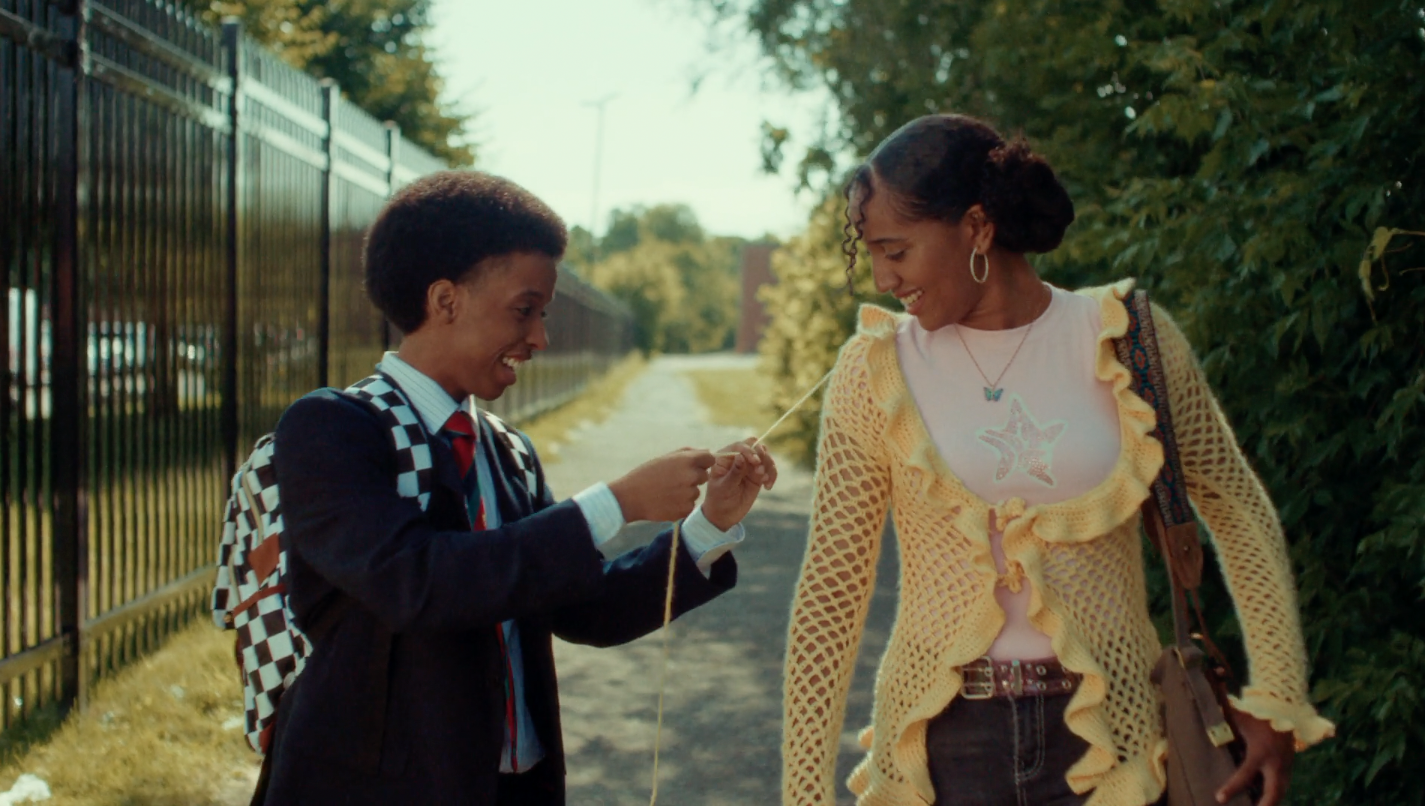
A Tribe Called Love is a breath of fresh air, documenting the Canadian immigrant experience as younger generations navigate their North American reality and age-old traditions.
Using animation, a charming cast of both professional and first-time actors, and musical interludes – shout out to Aaron Manswell for the great scoring – the film takes you on a journey with the characters as they navigate a strict, traditional rule that no longer works for them in the modern day. As these characters enter adulthood, their dreams and aspirations to build bridges between the tribes and community prove to be the driving force for a new way of approaching their culture. Special mention goes to Omar Abdi, who plays Farah’s father and starred in the beautiful The Gravedigger’s Wife, which premiered at TIFF in 2021 and was nominated for Best International Film at the 94th Academy Awards.
Ahmed makes this film extremely accessible by using Shakespeare’s Romeo and Juliet, while also calling on cult classics like Scott Pilgrim vs. the World, which brings a familiarity and a throughline that connects audiences regardless of their backgrounds. There’s also a connection to food and culture at the central meeting point for all involved: Farah’s family’s restaurant, because, through it all, they all have to break bread, and Ayeeyo’s Place is the best option in town to connect all tribes to their roots. Despite the light, comedic tone in the first half of the film, there will be tragedy, as the source material foreshadows, so be prepared for a gut-punch reality check and a deeper understanding of acts broadly labelled as gang violence.
This charming and heartbreaking first feature stays respectful to cultural values, while making it an accessible, universal tale of two people who defy traditions to find love. Authentic stories are the secret ingredient that touch the populations who make Toronto and Canada vibrant. Ahmed takes his place as the first Somali Canadian to shoot a film in Canada, and communities need to see themselves reflected on and behind the camera.
A Tribe Called Love will fast become one of the canon of films that highlight immigrant families coming to North America to build lives for themselves and the next generation living defiantly, like Mississippi Masala or West Side Story. After its World Premiere at Reelworld in 2025, see it during its theatrical run starting April 17. You can still get tickets at Cineplex for several screenings that weekend here.
 View From the Dark
You must be logged in to post a comment.